
मनुस्मृति विद्त विचार गोष्ठी में वर्ण व्यवस्था एवं नारी स्वतंत्रता पर विचार….
मनुस्मृति विद्त विचार गोष्ठी में वर्ण व्यवस्था एवं नारी स्वतंत्रता पर विचार….
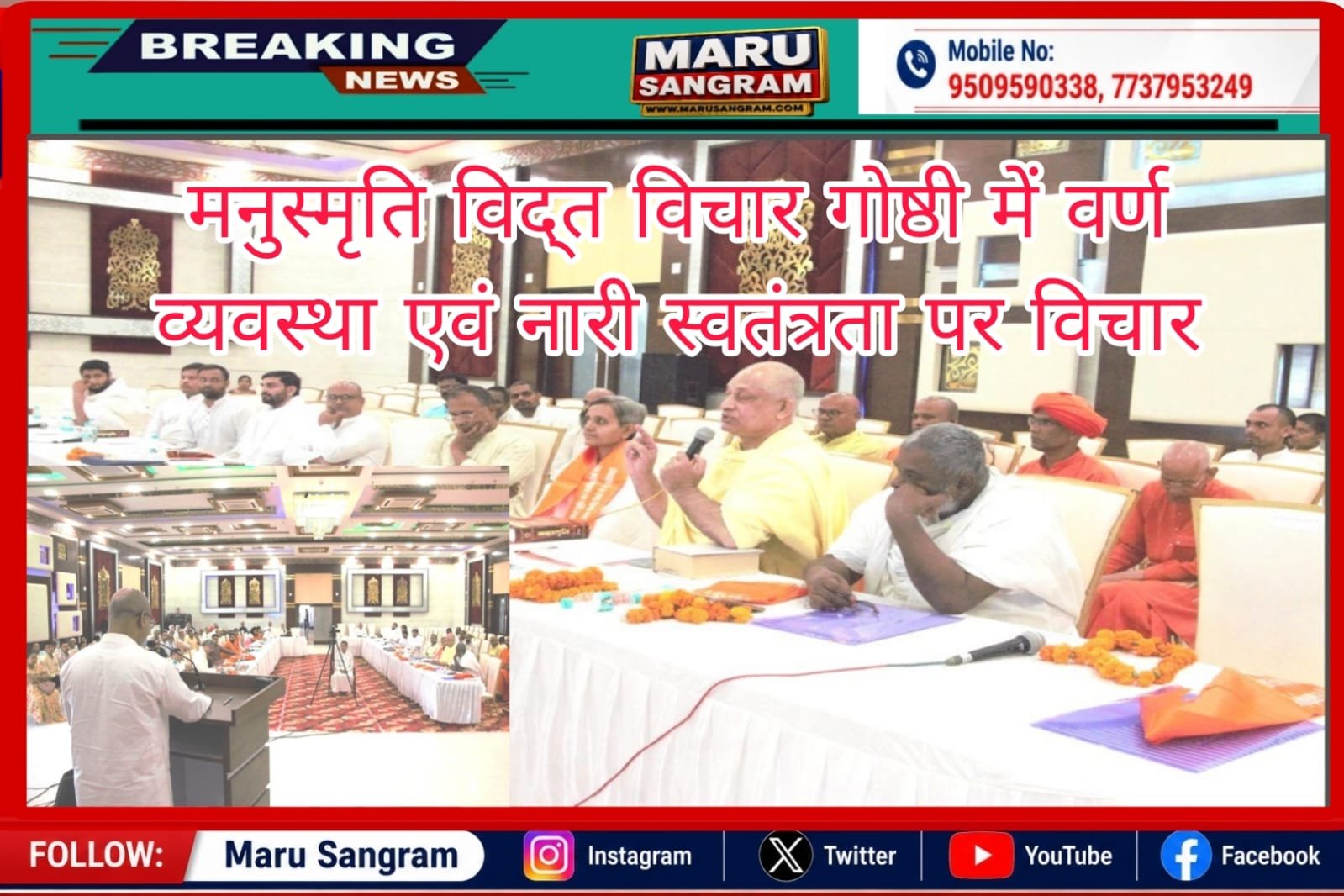
बीकानेर, @MaruSangram। शिक्षाविद् एवं समाजसेवी स्वर्गीय रामनारायण स्वामी की स्मृति में आयोजित दो दिवसीय विद्त विचार गोष्ठी के प्रथम दिन आज शास्त्रों के ज्ञाता, विषय विशेषज्ञों एवं विद्वानों के विचारों के दो सत्रों का आयोजन किया गया।
प्रथम सत्र की अध्यक्षता फरीदाबाद से पधारे आचार्य डॉक्टर निरजंनलाल मंगल ने तथा द्वितीय सत्र की अध्यक्षता कन्या गुरुकुल रोजड से आई आचार्य शीतल ने की मुख्य वक्ताओं में रोजड के डॉ. दीपक आर्य, कानपुर से उत्कर्ष आर्य, बीकानेर से डॉक्टर चंचल पाठक, इलाहाबाद से पधारे डॉक्टर प्रेम शंकर सिंह, बीकानेर से डॉक्टर नंदिता सिंघवी, हैदराबाद से आचार्य हरिप्रसाद आचार्य, गुरुग्राम से डॉक्टर सुरेंद्र कुमार, फलोदी से पधारे केसरमल, बीकानेर से नीरज श्रीवास्तव, बनारस हिंदू विश्वविद्यालय से डॉक्टर शिवलोचन शांडिल्य, हमीरपुर से आचार्य रविंद्र, आचार्य, डॉ निरंजन लाल मंगल, मनुस्मृति के एक अंक के लेखक डॉ सुरेंद्र कुमार ने मनुस्मृति पर अपने विचारों को प्रमाण सहित पक्ष और विपक्ष में प्रस्तुत किया।
उपस्थित प्रबुद्ध जनों ने अपनी शंकाओं का समाधान भी प्रश्नों के माध्यम से किया। उद्घाटन एवं परिचय से प्रारंभ हुई परिचर्चा में संतुलित एवं तथ्यात्मक रूप से प्रकट किए गए विचारों ने उपस्थित श्रोताओं को मंत्र मुग्ध कर दिया।
वक्ताओं ने मनुस्मृति के आधार पर विशेष कर वर्ण व्यवस्था एवं नारी स्वतंत्रता पर मुखर रूप से अपने विचारों को प्रकट किया। मनुस्मृति के आधार पर दंड व्यवस्था तथा झूठी गवाही एवं अपराध के संदर्भ में विवेचन की गई।
प्राचीन काल में मनुस्मृति जिन सामाजिक परिस्थितियों में सामने आई उसे उस समय समाज की संरचना, परिवार व्यवस्था, शिक्षा, अर्थव्यवस्था, शासन व्यवस्था, न्याय व्यवस्था और स्त्री-पुरुष की सामाजिक भूमिकाएं जोकि आज से बहुत अलग थी, इसलिए उस समय बनाए गए सामाजिक नियमों को वर्तमान रूप में आज लागू करने से पहले यह देखना आवश्यक है कि वह आज के समाज की आवश्यकताओं और न्याय की वर्तमान समझ के अनुकूल है या नहीं।
कार्यक्रम के अंत में भजन-सत्संग का भी कार्यक्रम हुआ जिसमें आर्य उत्तम ने मधुर भजन प्रस्तुत किए।
Thoughts on the caste system and women’s freedom at the Manusmriti Scholars’ Symposium…
Thoughts on the caste system and women’s freedom at the Manusmriti Scholars’ Symposium…
Bikaner, @MaruSangram. On the first day of the two-day scholarly symposium, organized in memory of the late educationist and social worker Ramanarayan Swami, two sessions were held today, featuring discussions by scholars of scriptures, subject matter experts, and scholars.
The first session was chaired by Acharya Dr. Nirjanlal Mangal from Faridabad, and the second session was chaired by Acharya Sheetal from Kanya Gurukul, Rozad. Key speakers included Dr. Deepak Arya from Rozad, Utkarsh Arya from Kanpur, Dr. Chanchal Pathak from Bikaner, Dr. Prem Shankar Singh from Allahabad, Dr. Nandita Singhvi from Bikaner, Acharya Hari Prasad Acharya from Hyderabad, Dr. Surendra Kumar from Gurugram, Kesarmal from Phalodi, Neeraj Srivastava from Bikaner, Dr. Shivlochan Shandilya from Banaras Hindu University, Acharya Ravindra from Hamirpur, Acharya Dr. Niranjanlal Mangal, and Dr. Surendra Kumar, author of a volume on Manusmriti. They presented their views on Manusmriti, supporting and opposing arguments with evidence.
The learned audience also sought answers to their doubts through questions. The discussion, which began with the opening and introductions, captivated the audience with its balanced and factually presented views.
Based on Manusmriti, the speakers articulated their views, particularly on the caste system and women’s freedom. Based on Manusmriti, discussions were made regarding the penal system, perjury, and crime.
The social conditions under which Manusmriti emerged in ancient times were very different from today’s social structure, family system, education, economy, governance, justice system, and the social roles of men and women. Therefore, before implementing the social rules made at that time in their current form, it is essential to examine whether they are compatible with the needs of today’s society and the current understanding of justice.
The program concluded with a bhajan-satsang, in which Arya Uttam presented melodious bhajans.